





How Can Solar Street Lights Be Brighter Without Increasing Power?
With the global push for energy efficiency, solar street lights are becoming more prevalent. However, one question that often arises is how to increase the lumen output and overall efficiency of these lights without increasing their power consumption. Through optimization of design and technology, significant improvements in light efficiency can be achieved. Below are some key strategies to accomplish this.
1. Using High-Efficiency LED Chips
The most direct and effective way to increase the light efficiency of solar street lights is by utilizing high-efficiency LED chips. Modern LED chips from brands like Cree and Osram can provide up to 180 lumens per watt. By using these advanced chips, the light output can be significantly increased without changing the power consumption.
2. Optimizing Solar Panels and Batteries
Efficient energy harvesting and storage are critical for solar street lights. By choosing high-efficiency monocrystalline solar panels, the conversion efficiency is maximized, enabling the system to capture more solar energy. As for batteries, lithium-ion batteries are becoming the standard due to their high energy density and long lifespan. Lithium batteries also perform well under extreme temperatures, ensuring the system's efficiency in various conditions.
3. Implementing Smart Control Systems
Smart control systems help optimize energy use by adjusting the brightness based on actual needs. Common systems include light sensors and timers, which automatically adjust the brightness according to the time of day. For example, the brightness may be reduced during off-peak hours and increased when motion sensors detect pedestrians or vehicles. This not only conserves energy but also extends battery life.
4. Improving Optical Design
The optical system of the light fixture plays a crucial role in enhancing light efficiency. By using high-transmittance lenses and beam control designs, more light can be focused on the areas that need illumination, reducing light loss. This design improves the efficiency of light utilization, allowing for better illumination without increasing power consumption.
5. Optimizing Thermal Management
The operating temperature of LEDs significantly impacts their efficiency. By improving the thermal management of the fixture, the working temperature of the LEDs can be kept low, which in turn enhances their light output. Using high-thermal-conductivity aluminum heat sinks, combined with effective airflow design, helps maintain lower operating temperatures, reducing light degradation and boosting overall efficiency.
6. Adapting to Different Environmental Conditions
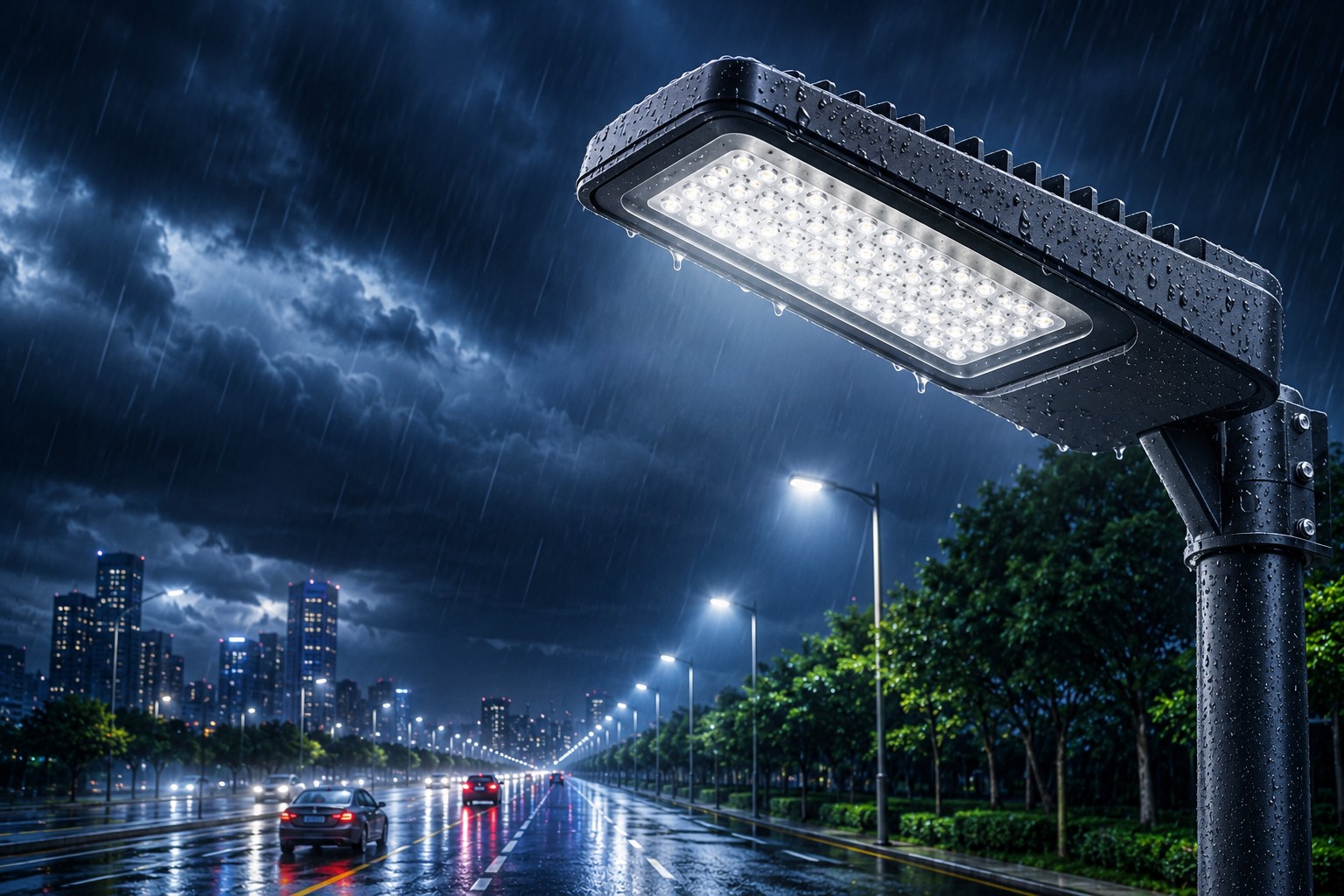
Solar street lights are often deployed in a variety of environmental conditions. In humid environments, corrosion-resistant and waterproof designs are essential to ensure long-term performance. On the other hand, in dry, desert-like conditions, the equipment needs enhanced dust-proofing and heat resistance. Tailoring the design to specific environmental challenges can extend the lifespan of solar street lights while ensuring stable light efficiency in harsh conditions.
By applying these strategies—high-efficiency LED chips, optimized solar panels and batteries, smart control systems, improved optics, and thermal management—solar street lights can achieve higher light output and efficiency without increasing power consumption. These advancements provide a more effective lighting solution, meeting the needs of different environments.